
Blog
DONIC Zhang Jike New Era VS Original Carbon – Reviews and Comparison

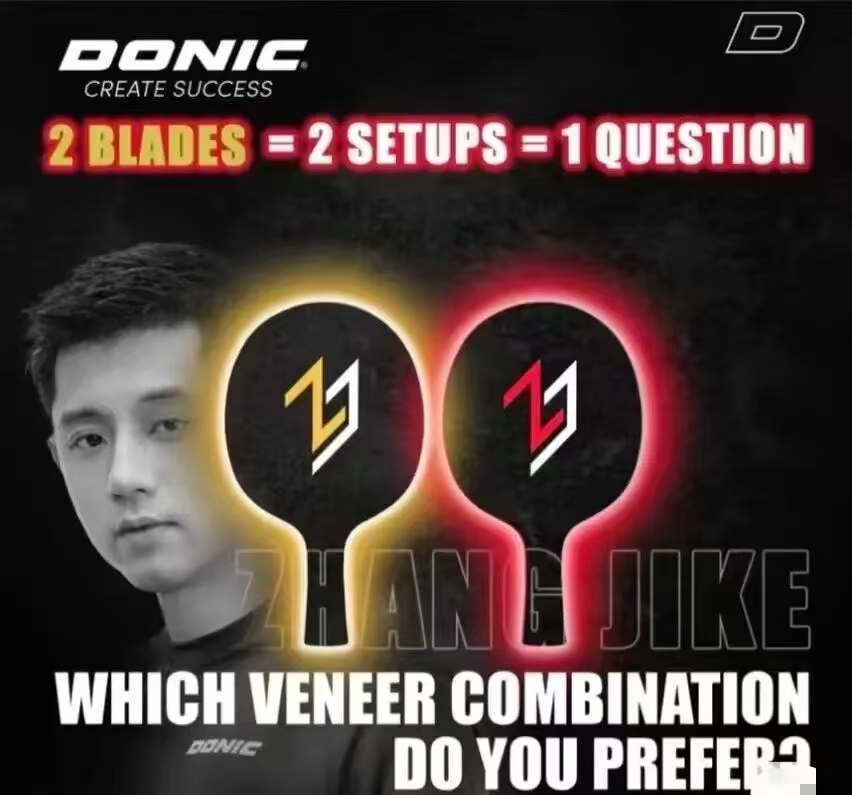
| Image | Product | Features | Price |
|---|---|---|---|
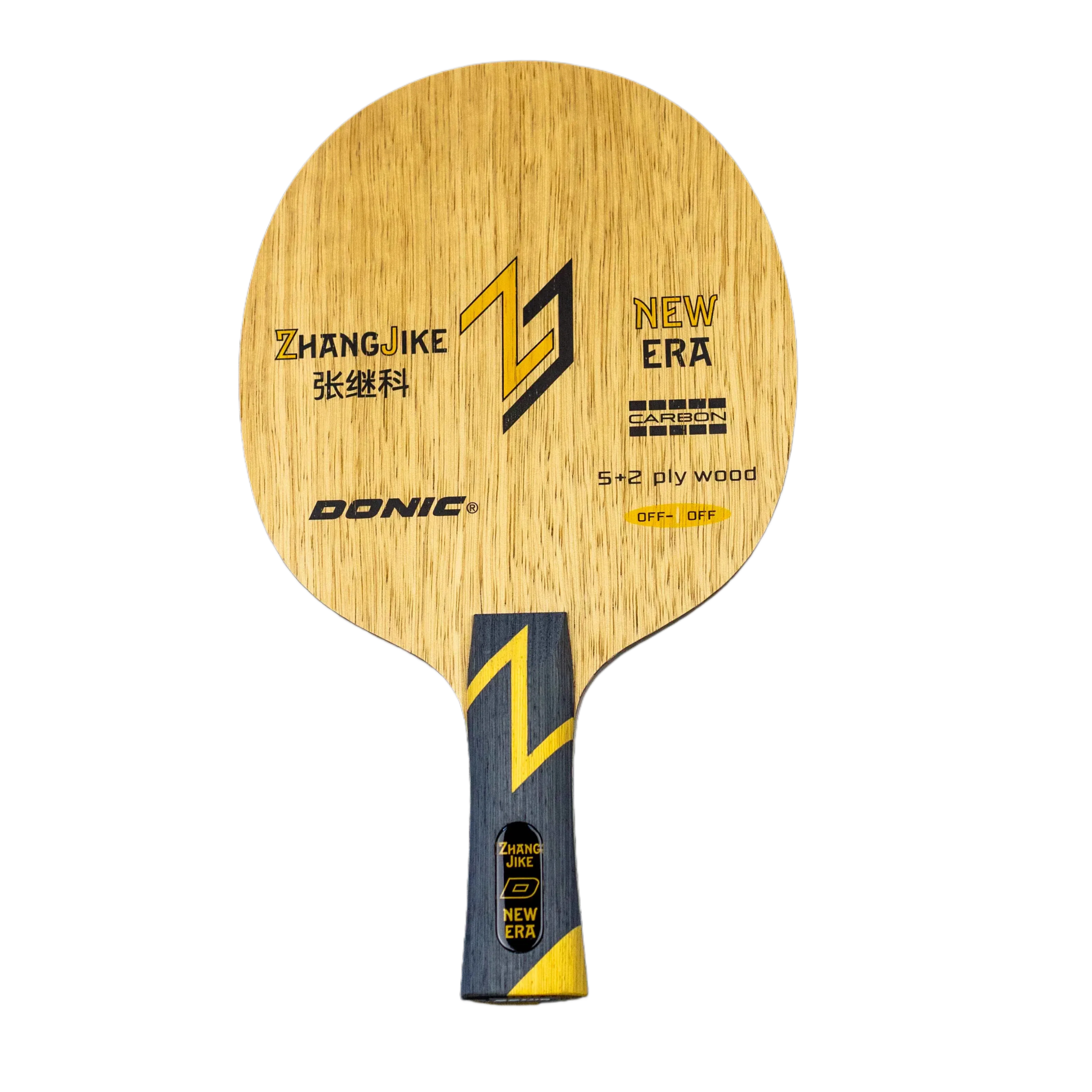 | - All-round offensive with wood layers | Check Price | |
 | - Offensive, fast attack with carbon layers | Check Price |
When it comes to Zhang Jike, one detail every table tennis fan knows is his long-standing use of the Butterfly Viscaria “K-code.” From the young prodigy who stunned the world in Rotterdam to today’s Coach Zhang under the Donic banner, his recent switch of blade sponsorship came as a bombshell in the table tennis world.
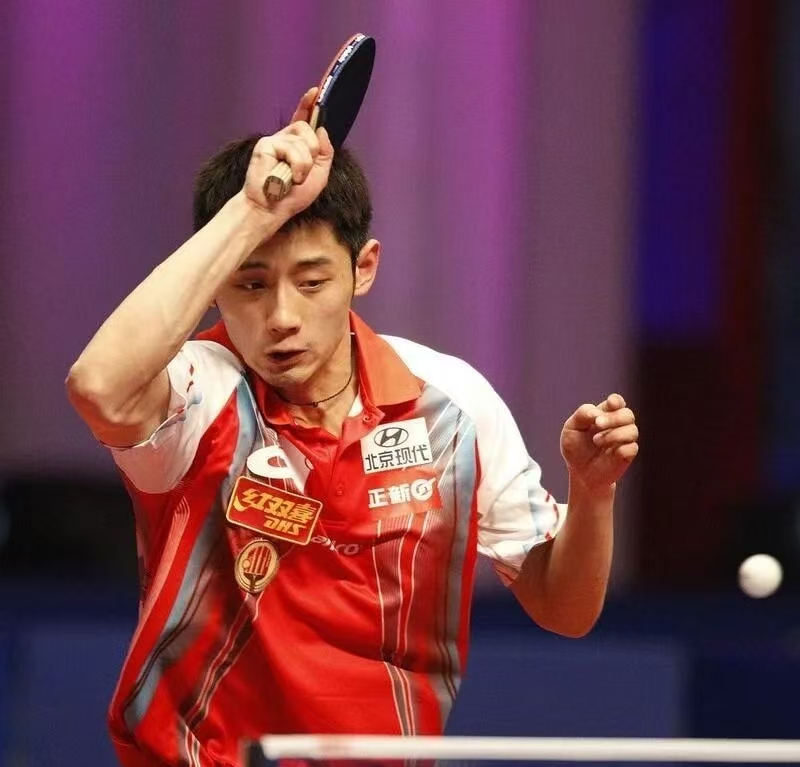
Donic, of course, has a strong pedigree in blade innovation, with iconic successes such as the Waldner Senso Carbon and the Ovtcharov V1. But the buzz truly began when Zhang revealed during a livestream that the Donic Zhang Jike Original Carbon——nicknamed the “Red Zhang” for its distinctive red stripes—was engineered to mirror the feel of his very own customized Viscaria, adjusted precisely to his personal preferences. The idea of holding a blade that captures the performance of a Grand Slam champion’s “personal hand blade” instantly captured players’ imaginations, pushing the Red Zhang to the center of attention.
In this review, I’ll be putting two of Donic’s most talked-about blades to the test: the Zhang Jike Original Carbon and the Zhang Jike New Era.
| Dimension | Original Carbon (Red, Outer Carbon) | New Era (Yellow, Outer Carbon) |
|---|---|---|
| Overall Feel | Crisp and direct, strong rebound | Soft and wrapping, noticeable flex |
| Speed | Very fast with strong pressure | 1st speed slow, 2nd speed accelerates |
| Spin | Requires active power | High friction efficiency |
| Control | Slightly fuzzy for short balls, precise in strong rallies | High error tolerance, excellent spin control |
| Defense | Strong in leveraged defense, excellent counterattack | Good flex cushioning, but slower in defensive returns |
Appearance & Construction
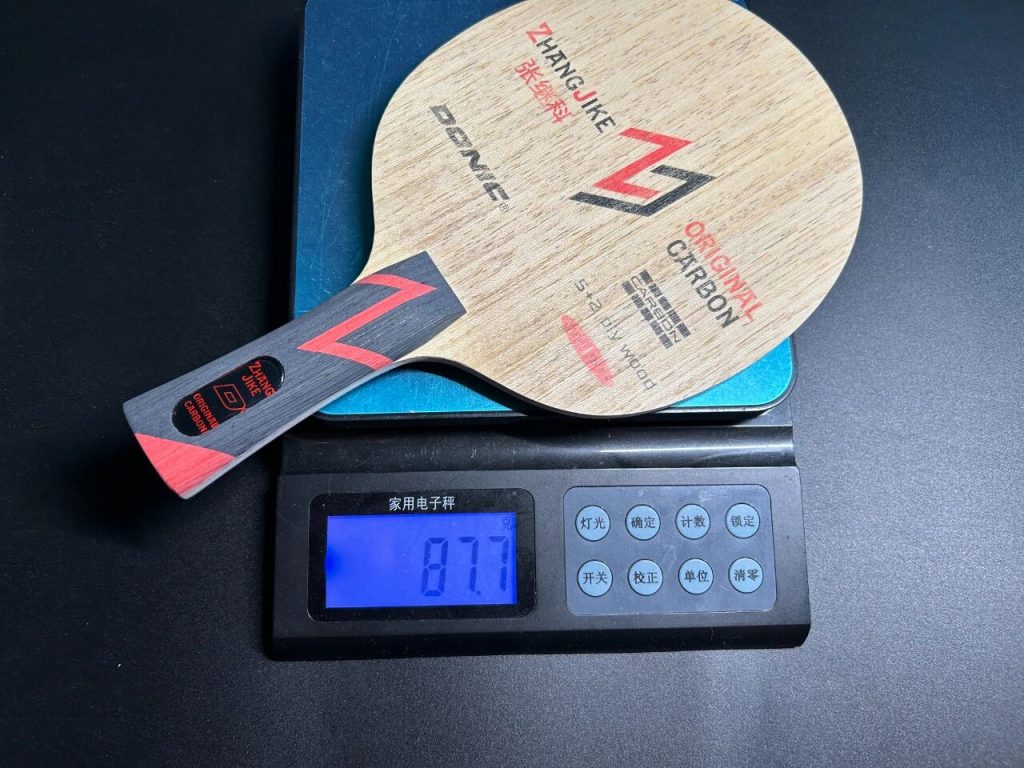
Both blades come in at 87.7g, which makes them fairly balanced in weight for offensive play. In terms of thickness, the Original Carbon measures 5.80mm, while the New Era is slightly thinner at 5.71mm, a subtle difference that nonetheless influences how each blade feels on contact.
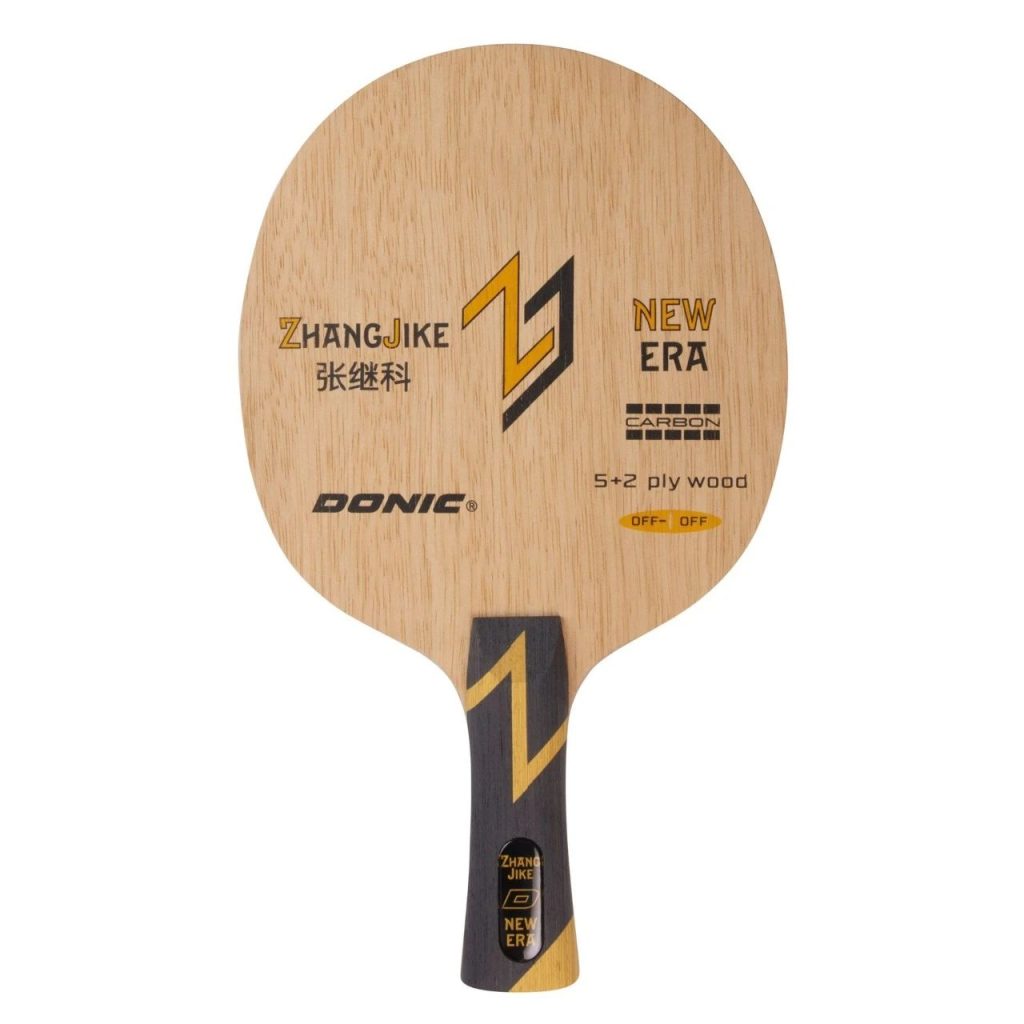
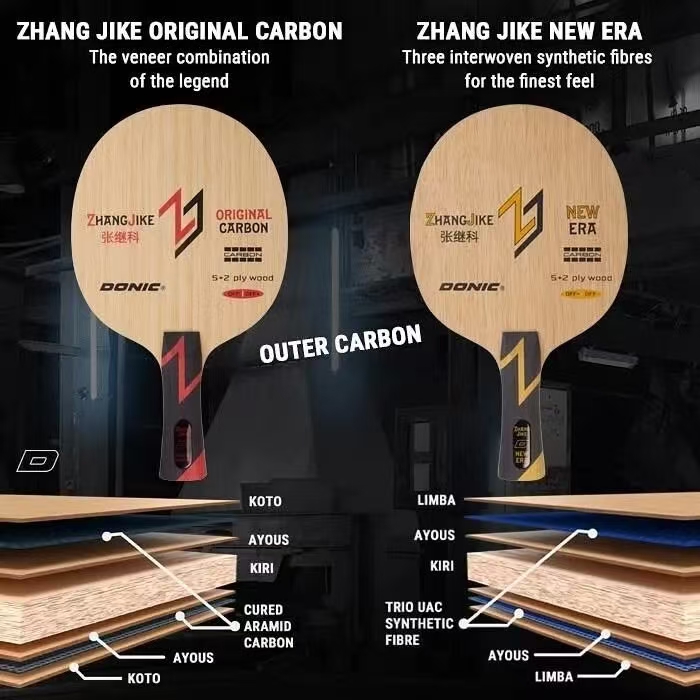
Structurally, both models feature a 5+2 outer composition (five wood plies with two carbon layers). The Original Carbon follows the classic Viscaria-style construction, providing a familiar touch and rebound for players who prefer a crisp, direct response. By contrast, the New Era introduces a different design choice: it replaces the harder koto outer ply with limba, a softer top veneer. This change not only alters the blade’s elasticity and dwell time but also gives it a smoother, more controlled sensation in play.
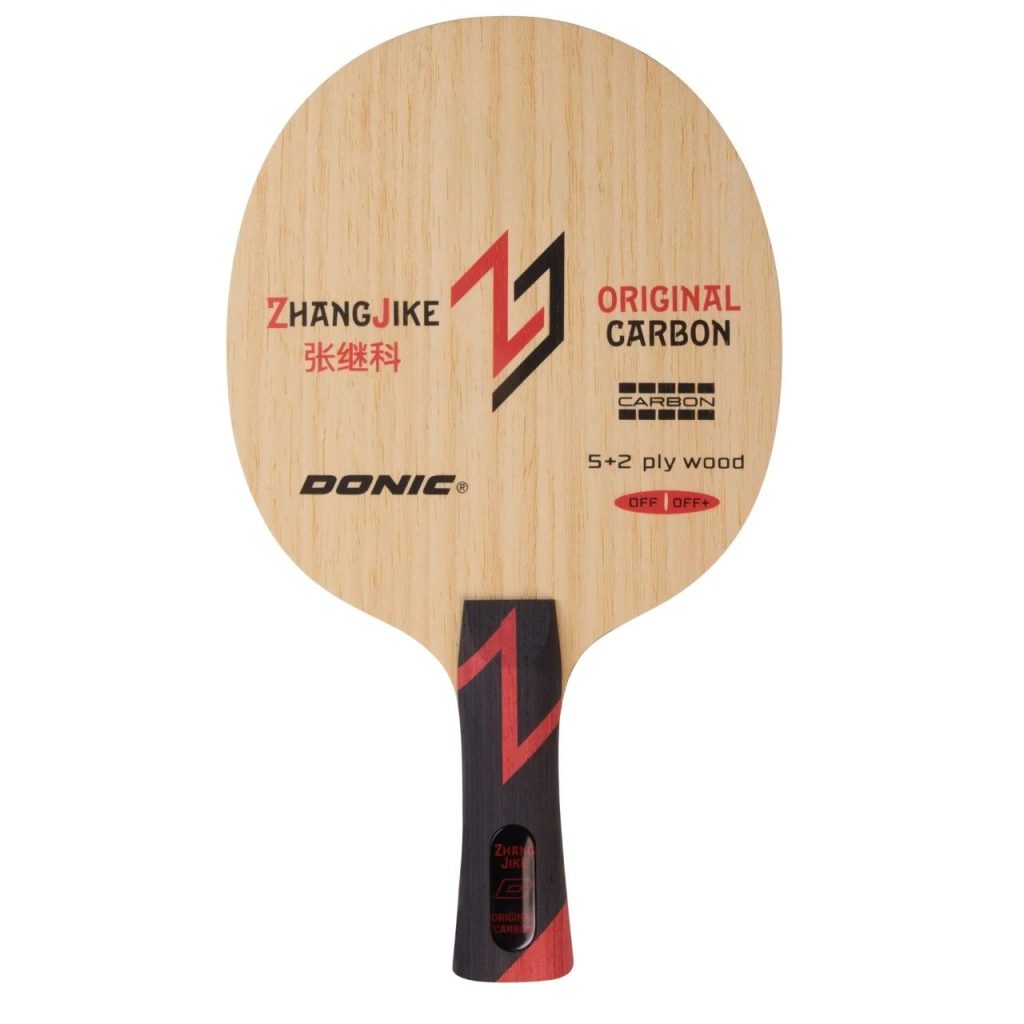
From an appearance standpoint, the Original Carbon is distinguished by its red accents on the handle, which highlight its link to Zhang Jike’s signature style. The New Era, on the other hand, carries yellow elements, giving it a fresher, more modern look. Both blades are well-finished, with Donic’s craftsmanship ensuring clean edges, consistent layering, and a premium feel right out of the box.
Overall Feel
The Original Carbon feels very comfortable right from the start. The handle is full and smooth, making it easy to hold, similar to the feel of high-end blades like the Nittaku Basalt Master. When hitting the ball, the response is crisp and clear, and vibrations are directly transmitted to the hand, giving a precise sense of the ball’s speed and direction.
The New Era, on the other hand, feels softer and more flexible. The blade bends a little when hitting the ball, giving a gentle, wrapping sensation. Vibrations are mild, and the ball stays on the blade a bit longer, making it easier to control. It is also easy to generate speed and spin without much effort, making it beginner- and intermediate-friendly.
Speed
The Original Carbon is extremely fast and aggressive. When struck with enough power, it puts strong pressure on the opponent. However, at low to medium force, its attacking potential is less noticeable, as this blade really needs a confident, solid stroke to shine. I tested it with top-level provincial and national team players, and in their hands, the Original Carbon truly released its energy. At medium to high power, it offers strong support, producing explosive ball speed and a sharp, ringing sound on impact—like a spirited horse finally finding its master. In a way, this blade is like a wild horse: it challenges most players, but once it “submits” to the right hands, it delivers astonishing offensive power.
The New Era feels much gentler, like an old friend you haven’t seen for years. Its speed is not as intense—similar to Fan Zhendong’s ALC in feel—so it doesn’t naturally produce high-speed, threatening shots. However, it excels in spin and produces a longer ball trajectory. To make the most of its offensive potential, a player needs solid technique and timing. Compared with the Original Carbon, the New Era has less power close to the table but performs better from mid- to long-distance play, making it more suitable for controlled, spin-oriented strokes.
Spin
The Original Carbon relies heavily on the rubber for generating spin. The blade’s carbon layers provide strong support but short dwell time, which means the ball can easily fly off the table if the stroke is too light. To generate effective spin, you need a combination of friction and a powerful, focused strike. Weak strokes tend to produce low, flat loops that lack a full arc, making small-spin topspins prone to errors.
However, for players with concentrated, forceful strokes—like Zhang Jike—the ball comes through with tremendous speed and spin. For optimal performance, pairing this blade with a slightly softer, highly spinny rubber is recommended. On counter-attacks, especially against heavy incoming spin, the blade also provides excellent rebound power, but overall it demands strong, deliberate strokes to shine.
The New Era, by contrast, offers much more flex and longer dwell time, making it less dependent on raw power. Its forgiving nature allows for better spin generation, particularly on short or low balls. The blade excels in looping, push attacks, and high-arc topspins, offering high tolerance for stroke errors. As long as your technique is correct, the New Era helps the ball stay on the table, providing a very comfortable feel. Compared with the Viscaria, it offers higher control and spin consistency, making it easier for players to execute precise topspins and controlled attacks.
Power & Stability
The Original Carbon delivers stronger power when fully engaged, giving a noticeable “explosive” feel. After striking, the ball comes off the blade with a heavy, smashing sensation that clearly pressures the opponent. Its aggressive character reflects Zhang Jike’s own playing style—fast, forceful, and full of intensity.
The New Era, on the other hand, excels in stability. While it doesn’t have the same explosive amplification as the Original Carbon, it provides solid support and consistent energy transfer. As long as your stroke mechanics are correct, the New Era allows you to reliably place the ball on the table, offering a safer, more controlled feel.
Control & Defense
The Original Carbon is slightly less precise on short table play compared with the New Era. When performing short topspins or flicks close to the table, it can feel harder to control and less forgiving. However, in defensive situations, the blade is very solid—striking balls with strong incoming power doesn’t compromise your stability. This makes the Original Carbon ideal for mid-distance exchanges and high-level offensive battles, where even passive placement can surprise opponents. The blade carries a bit of its own offensive energy during defense, but because of its lower tolerance for errors, it demands highly precise technique.
The New Era, by contrast, offers better control on short balls, with a more delicate feel for flicks, pushes, and placement shots. Its defense relies on blade flex and cushioning, resulting in slower returns that require more active energy from the player. While its offensive threat in high-level exchanges is not as strong as the Original Carbon, its superior stability and higher error tolerance can give players an extra beat in matches, making it easier to maintain consistent, controlled play.
Conclusion
Butterfly blades are known for their balance, which makes them relatively easy to handle for most players. However, they tend to lack distinctive personality; their characteristics are often subtle rather than bold. Butterfly designs generally follow fixed templates and make fine adjustments to suit different athletes, whereas Donic blades take a different approach.
Donic emphasizes the playing style and personality of the athlete when designing a blade. For example, the Waldner Senso Carbon was made to emphasize control, while the Ovtcharov V1 focused on aggressive play. Similarly, the Original Carbon reflects Zhang Jike’s sharp, aggressive style. When properly handled, it can put tremendous pressure on opponents, showcasing the athlete’s unique “signature” on the blade. This highlights the difference in philosophy between the brands.
The Original Carbon requires solid fundamentals to master. Like a wild horse, it is very selective about its owner—it demands highly skilled players. Beginners or intermediate players may find it hard to control, and low to medium strokes may not fully utilize its offensive potential. Only with focused, powerful strokes can its support and explosive response truly shine. This blade is best suited for professional or semi-professional players with tight, compact technique.
The New Era, on the other hand, is much easier to use. It feels softer, more forgiving, and has a higher tolerance for errors—even more than the Viscaria. Although its support is not as strong as the Viscaria, its higher error tolerance makes it a more comfortable choice for players who prefer reliability and consistency. Personally, if I had to choose between the New Era and the Viscaria, I would pick the New Era, as I prefer blades with higher forgiveness, similar to Fan Zhendong’s ALC.
The Original Carbon is better suited for professional players, while the New Era is more suitable for amateur or recreational players.
In summary, the Original Carbon emphasizes extreme offense and speed. It can compete at a high level in fast exchanges and has strong defensive counterattack ability. The New Era emphasizes high forgiveness and spin; it may not be as aggressive as the Original Carbon, but it excels in stability, allowing the player to consistently place the ball on the table.
Recommended Rubbers
Original Carbon – Best suited for players who favor a fast-attack combined with looping style, strong backhand, and aggressive close-to-table play. Recommended rubbers:
-
Forehand: Donic J2, K2 PRO, D09C
-
Backhand: Donic S2, T05, Tibhar MX-P
New Era – Ideal for players who focus on looping and spin-oriented rallies, emphasizing control and consistency. Recommended rubbers:
-
Forehand: Donic J1, Tibhar K3 PRO, Xiom C55
-
Backhand: Donic Z2, G09C, V15 Extra Spin (V15S)

Hola, que gomas Donic le vendrían bien a la Original Carbon . La Yazaka Rakza Z le vendría bien ? Saludos desde Chile .
I have the ZJK OC with j1 for fh and j2 for bh. Way better feeling compared to my old bat, Viscaria with H3 NEO provincial and t64.