
Blog
TIBHAR Hybrid K3 Pro Review – A Balanced Yet Explosive New Choice!

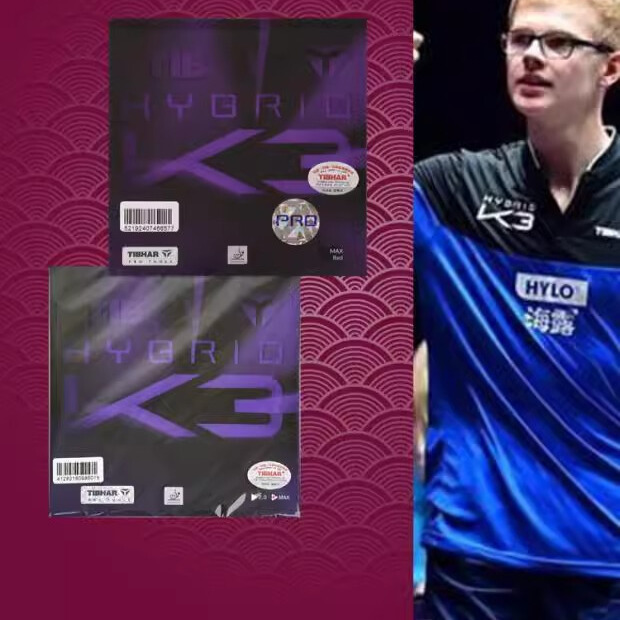
| Image | Product | Features | Price |
|---|---|---|---|
 | Hybrid rubber with a tacky topsheet and hard sponge, offering high spin, powerful speed, and strong grip, ideal for aggressive topspin play and strong counterattacks. | Check Price | |
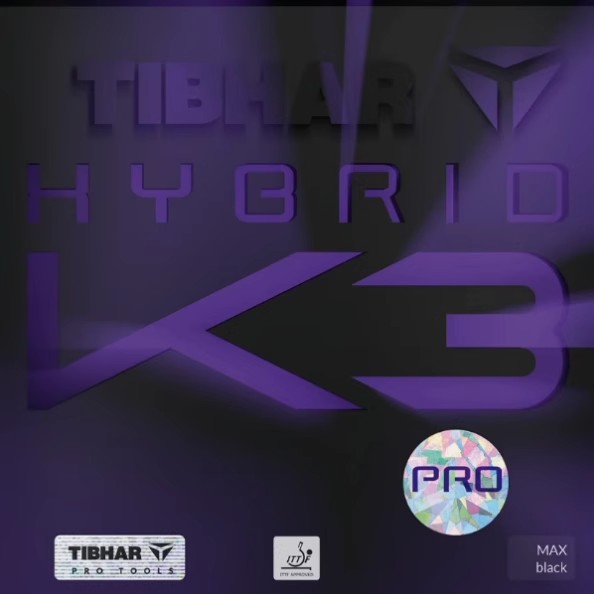 | Enhanced hybrid rubber with a tacky topsheet and harder sponge, providing increased speed, higher spin potential, and stronger stability, ideal for aggressive loopers and powerful counterattacks. | Check Price |
In the ever-evolving world of table tennis equipment, the right rubber can make all the difference between a good game and a great one. The TIBHAR Hybrid K3 Pro is the latest innovation in the K-series, designed to meet the needs of elite players who demand both control and explosiveness. With its balanced performance and high adaptability, it has quickly become a popular choice among professional and amateur players alike.
One of the biggest endorsements for the K3 Pro comes from the Lebrun brothers, two rising stars in the international table tennis scene. Their decision to switch to dual K3 Pro rubbers has sparked curiosity among fans and professionals—why did they make the change? What makes this rubber stand out from the rest? Let’s dive into the details.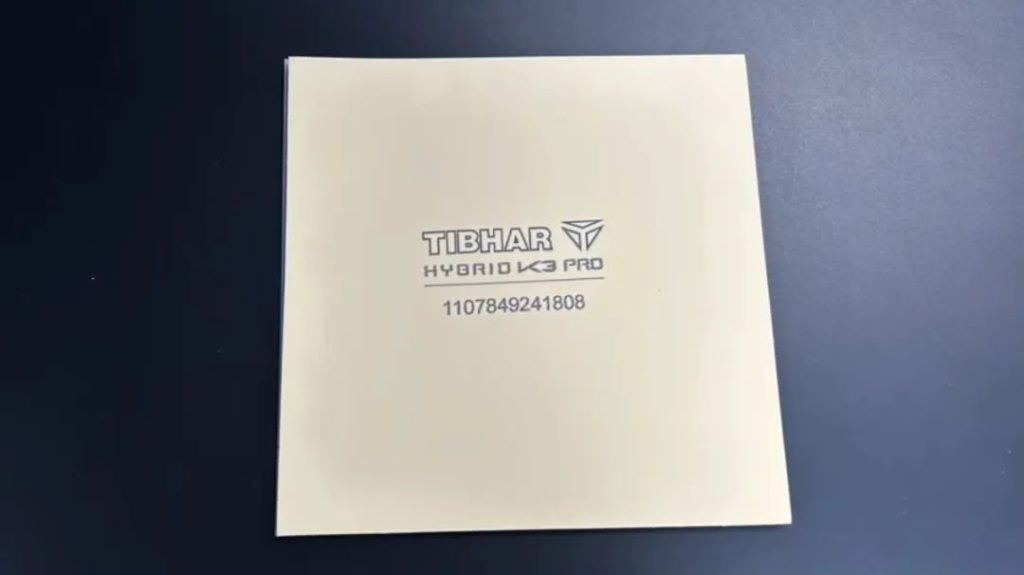
About the Lebrun Brothers
Following their impressive performances at the 2024 Paris Olympics, Félix Lebrun and Alexis Lebrun have firmly established themselves as rising stars on the global table tennis stage. The dynamic duo captivated audiences with their aggressive playing styles, exceptional agility, and creative shot-making, setting new records and earning widespread acclaim.
- Félix Lebrun: At just 17, Félix made history by winning a bronze medal in the men’s singles event, becoming the youngest Olympic table tennis medalist ever. His fearless approach and innovative techniques have rapidly propelled him into the international spotlight, making him one of the most exciting talents to watch.
- Alexis Lebrun: Complementing his younger brother’s breakthrough, Alexis has consistently demonstrated power and precision on the table. His stellar performance in the team event contributed significantly to France’s bronze medal in the men’s team competition, solidifying his reputation as a dependable and formidable player.
Together, the Lebrun brothers not only boosted France’s medal tally at Paris 2024 but also sparked a surge in national interest for table tennis. Their switch to the TIBHAR K3 Pro further underscores their commitment to a high-speed, high-spin game that is rapidly reshaping the sport.
Why Did the Lebrun Brothers Switch to K3 Pro?
The success of the TIBHAR K3 laid a strong foundation for the K-series’ reputation and sales, making it one of the best-selling rubbers in China. Interestingly, the K3 Pro was launched in China even before its official German packaging was ready. With Félix and Alexis Lebrun switching to a dual K3 Pro setup, fans started wondering: Why did they move from K3 to the Pro version? Let’s break it down.Physical Evaluation
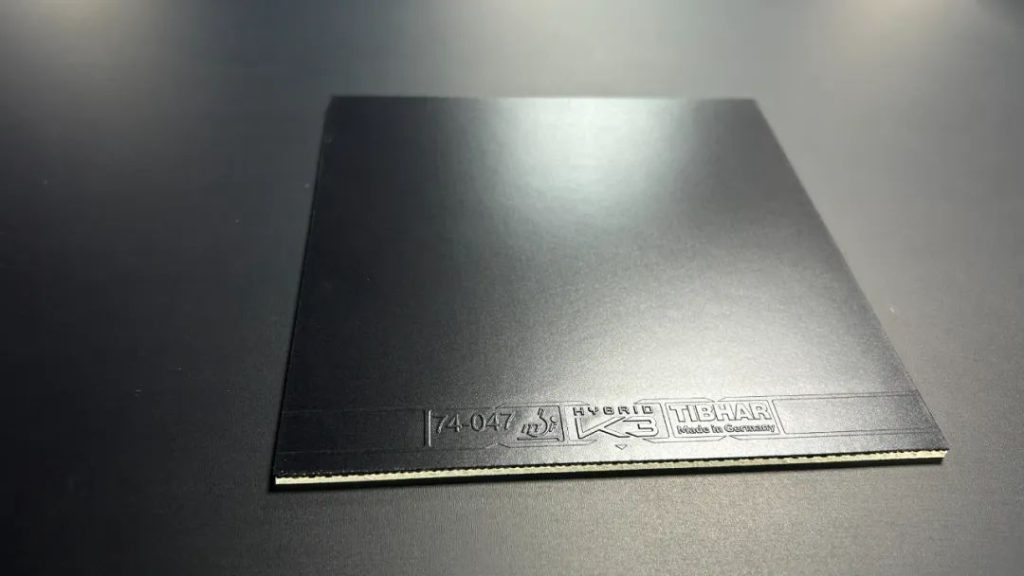
Appearance & Hardness
- K3: 53-degree hardness (equivalent to 39.5-40.5 Shore A, with an actual feel of 39 degrees)
- K3 Pro: 55-degree hardness (equivalent to 40-41 Shore A, similar to Hurricane 40 degrees)
Basic Parameters
- Weight (after cutting for a Fan Zhendong blade): 50g
Tested Blade Configurations:
- Fan Zhendong ALC – Forehand: K3 Pro, Backhand: Tenergy 19
- TIBHAR MK Blade – Forehand: K3 Pro, Backhand: K3 Pro
On-Table Performance
Overall Feel and Response
Overall, the K3Pro provides an extremely clear feel at low to medium power levels without the noticeable “dead zone” that many high-hardness German rubbers exhibit. I’ve played with a great number of high-end German rubbers—such as Xiom’s C55 (used by Hugo), Donic’s China Shadow, Gewo’s Super Secret 55, and Stadica’s new Dragon Power.
They are generally very high in quality; in fact, some of these rubbers (like the C55a) even surpass the K3Pro in rubber quality. However, these rubbers share one characteristic: there’s a very evident gap or dead zone in the medium-to-light power range. This means that, when it comes to balancing offense and control, they lean overwhelmingly toward offense. That gap in power delivery makes your shots feel somewhat “off” or stifled.
The K3—and by extension, the K3Pro—does not have this issue. Its excellent integration and transparency give it a premium feel. It offers explosive power on heavy shots and a very clear, uninterrupted feel on light shots. Whether you’re playing with low, medium, or high power, the sensation is completely authentic. Frankly, only Butterfly rubbers can truly achieve such honest feedback. For instance, when executing a moderate loop or drive, you get the sense of building up force, pausing, and then unleashing it in a stable, controlled burst.
No matter how hard you hit, the K3Pro can meet your needs. Its ability to suddenly accelerate and change speed is very strong. If you’re consistently executing medium-power strokes and then suddenly add force, that sudden burst is remarkable—often catching me off guard. This is one of the advantages that many rubbers simply don’t offer; if a rubber has a “blocking” sensation, it won’t have this property.
Up to this point, I’d equate the K3Pro with the D09C: both exude a unique premium feel, with strong integration, stability, and quality—and the rubber isn’t overly heavy. In terms of quality, K3Pro is on par with (or even better than) the D09C, while in stability, the D09C has a slight edge over the K3Pro.
Overall Hardness and Power
The K3’s overall hardness isn’t too high—it’s comparable to DHS Hurricane’s 39° version. Especially when compared with many high-end German rubbers known for their higher hardness, or even Butterfly’s D09C, the K3 is on the slightly softer side. This softness makes it exceptionally penetrative and “ball-eating,” with very strong spin. I personally love that characteristic. However, in terms of blade compatibility, it doesn’t pair well with blades that are too soft—for instance, when used with the Fan Zhendong Alc that I brought today, it felt somewhat lackluster. In contrast, the K3Pro is a hardened version of the K3—similar to DHS Hurricane’s 40° version. Today, the K3Pro paired with the Fan Zhendong Alc and the Tingba Mk blade delivered a very solid experience. It seemed as if its power had no upper limit—the surge after impact was explosive! The ball flew out like it was shot from a cannon. I even exclaimed that I had finally found the perfect match for the Fan Zhendong Alc. In terms of generating topspin, it outperforms the K3; however, it doesn’t grip the ball as firmly as the K3 does.Topspin Play
The K3 has a softer feel (similar to Hurricane 39), making it easy to generate spin, while the K3 Pro is slightly harder (comparable to Hurricane 40), providing a stronger and more powerful loop drive. With the Fan Zhendong ALC and TIBHAR MK blades, K3 Pro offers limitless power, feeling like a cannon blasting the ball forward. Compared to other high-end German rubbers like Xiom C55, Donic China Shadow, Gewo Super Secret 55, and Stiga Dragon Power, some of these rubbers might offer superior shot quality, but they often suffer from a noticeable lack of response at low power (“dead zones”). In contrast, K3 and K3 Pro maintain a seamless, consistent feel across all power levels, much like Butterfly D09C.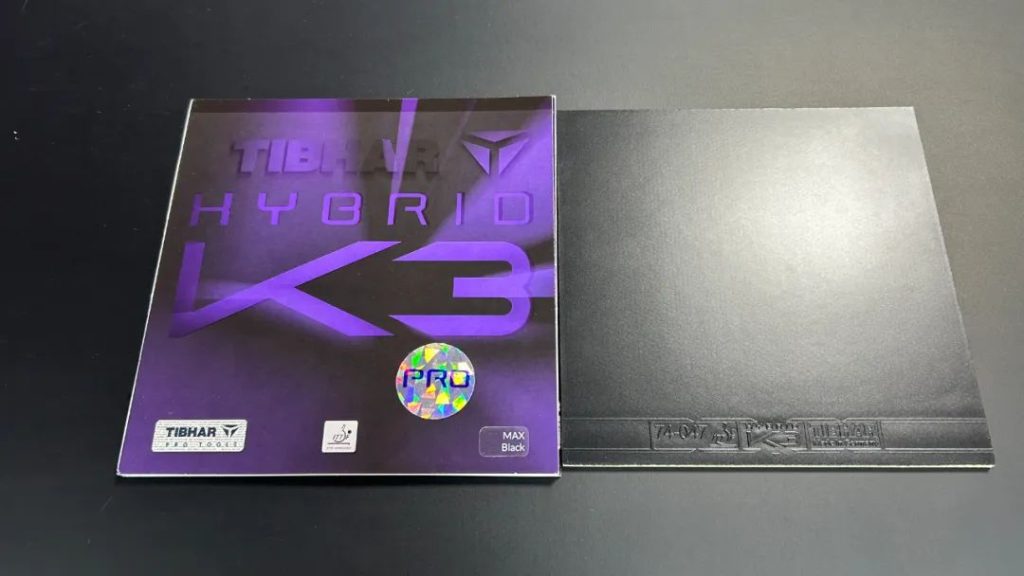
Backspin Play
Even if the speed isn’t outstanding, the integrated feel of the K3Pro lets you confidently execute underspin strokes. As advertised, it’s a perfect combination of speed and control—delivering excellent speed along with a very stable friction feel. This is especially evident when performing a forward drive against an underspin ball; you can clearly sense the precise contact, ensuring every shot is spot on.
It’s different from the thin-touch technique used with our Kuangbiao. The K3Pro’s thin-touch and forward drive capabilities are indeed superior to those of the Kuangbiao. In today’s era of the “big ball,” where spin has been reduced, pure thin-touch strokes are rarely seen—since they tend to cause the ball to drop, making that technique less viable. Jingqi and I were discussing this matter: when he played in the T-League on Japanese tables with the official balls, Kuangbiao was at a disadvantage in prolonged rallies. It couldn’t generate strong spin or high speed, and sometimes even dropped the ball due to imperfect technique. Both he and Hao Shuai have since switched to the K3Pro.
That said, because the K3Pro is a high-hardness sticky rubber, its capacity for power generation is stronger than that of the K3. However, on delicate, light shots, it doesn’t grip the ball as well as the K3—poor power execution can lead to net errors. In short, if you can generate strong power, the K3Pro is the choice.
Smash and Hit
The K3Pro is very well suited for the “big ball” era with its impact-oriented sticky rubber, though it doesn’t quite match the hitting dynamics of many grippy pimple rubbers. In our head-to-head comparisons with Kuangbiao, its hitting performance is far superior. However, its hitting ability is slightly inferior to that of the K3—after all, the K3’s slightly lower hardness makes generating powerful hits easier. If it were up to me, I’d choose the K3Pro for my forehand and the K3 for my backhand, since I sometimes find the backhand tapping or hitting more comfortable with the K3.
Looping Against Backspin
The high structural integrity of K3 Pro allows for confident strokes against backspin. Its speed and control strike a perfect balance, making loop drives precise and deadly. Unlike Hurricane’s thin brushing technique, K3 Pro provides a more forceful and direct impact, which suits the modern 40+ plastic ball era. The T.League experience of professional players confirms that Hurricane struggles against Japanese tables and balls, lacking both spin and speed in prolonged rallies. This led Cheng Jingqi and Hao Shuai to switch to K3 Pro.
Counter-Loops & Blocking
DHS Hurricane rubbers tend to rely on the rubber itself to neutralize spin because their relatively hard sponge lacks the resiliency needed for significant deformation. This makes them more prone to slippage in today’s “big ball” era—requiring more impact to successfully execute a counter-loop. In contrast, the K3Pro’s superior integration allows the ball to be securely “caught” by the sponge upon impact, making it easier to neutralize the opponent’s spin and thereby increasing the success rate of counter-loops.Control
Before trying out chopping techniques, I always believed that control was DHS Hurricane’s absolute strength—the precision in controlling short balls is impressive. Even though, when using the K3, my error shots sometimes went a bit too high, Jingqi asked me, “Why does Moregaard’s chop come out so short?” In our tests, it turned out that the DHS Hurricane’s control over small balls relies heavily on the rubber, meaning that a leveraging control technique can be extremely precise. Unfortunately, the K3Pro doesn’t lend itself to that same technique. Due to the combined characteristics of its sponge and rubber, using a forceful chopping (or varying) technique with the K3Pro results in shots with stronger spin and a more threatening short placement—the shot carries a sense of weight. In fact, the gap between high-end foreign rubbers and the Butterfly D09C in terms of chopping control is continuously narrowing. If your technique is more passive, DHS Hurricane’s control might suit you better; but if you’re more aggressive, the K3Pro could be the better choice. However, the harder sponge of the K3Pro means that, overall, its control isn’t quite as “delicate” as that of the K3.Defensive Play
In passive defense, the K3 excels with its superior ball-gripping ability—it wraps the ball more securely, which gives you greater confidence. On the other hand, the K3Pro’s firmer sponge ensures very stable control over the ball’s trajectory during defense. It also demonstrates better capability for counter-loops and ripping shots when defending. When defending with added force, you can feel an extremely precise contact as the ball hits the sponge, with a very concentrated sweet spot. While this enhances control over shot placement, it also demands a more refined touch. Thus, if your tactile sensitivity isn’t top-notch, the K3Pro might be harder to master, whereas the K3 offers higher controllability and a more delicate feel.
Who is suitable for Tibhar K3 & K3 Pro?
The K3Pro is more offensive and aggressive than the K3, so it is better suited for players who combine aggressive attacking with solid control. This rubber not only delivers exceptional offensive power but also offers a delicate feel and high error tolerance. Conversely, if you do not require such aggressive offense, if your playing style is less forceful, or if your fundamentals are not as solid—and you prefer a pronounced arc along with a smooth ball-grip and refined control—the K3 is the better choice. I recommend that players select the “weapon” that best matches their blade type and playing style.Blade to Match
The K3 Pro is not as widely compatible as the D09C. However, it pairs well with medium-hard or slightly softer blades, such as Fan Zhendong ALC, Viscaria, Zhang Jike ALC, Mizutani Jun ZLC, W968, and softer options like Hayata Hina, Tibhar Felix, Tibhar Alexis, Butterfly Harimoto ALC, and Basalt Master Innerforce. It is not recommended for very hard blades, such as Super Zhang Jike ZLC, pure carbon blades, or Harimoto SALC, as they may be too difficult to penetrate.
Conclusion
I consider the K3, K3Pro, and D09c to be products of the same tier. They are capable of adapting to an increasingly varied competitive environment—including different tables and tournament balls—and they better satisfy modern playing styles that demand high-speed pressure in mid-distance rallies.
Compared to the DHS Hurricane, their ball trajectories are more upright and feature a higher arc, ensuring that they hold their own in top-level confrontations while also delivering stronger, more stable control. On that note, I sincerely hope that domestic brand Double Happiness continues to improve and develops rubbers that are even more suited to the contemporary playing style for our Chinese athletes.
Returning to the characteristics of the rubber, the K3Pro is not an “upgraded” version of the K3 but rather a hardened variant—it actually feels slightly harder than the K3. This means that players who are not adept at generating power may find the K3Pro hard to control; this is its only shortcoming. The K3, with its superior feel, control, and ball-gripping ability, is more suitable for amateur players whose fundamentals are less consistent, whereas the K3Pro—with its greater support and durability—is better suited for players with solid fundamentals engaging in high-level matchups.
The K3 series stands out among German rubbers with its unique premium feel: it is lightweight, exhibits exceptional integration, and delivers a truly 1:1 response at all power levels. Its low-power performance is robust, offering the same premium solidity found in Butterfly’s rubbers. This is something many high-end German rubbers lack.
For example, the XIOM C55, despite its extremely high quality, shows a dead zone at lower power levels and weighs as much as 55 g. (That rubber is indeed top-notch—I’ll discuss it in more detail in upcoming videos and articles.) In contrast, the K3 and D09c weigh only 49 g. Currently, the only rubbers that combine lightweight design with high quality are Butterfly’s D series and the Tingba K3 series. Their control is excellent, with no “empty” rebound—unlike our traditional impression of offensive rubbers.
In this class, while the DHS Hurricane may offer strong control, it cannot deliver the offensive power that these rubbers provide! They give you authentic feedback, outstanding ball grip, and when executing a topspin loop, the friction is both delicate and smooth. The sensation of building up power, pausing, and then unleashing it is as familiar and comforting as an old friend.
