
Blog
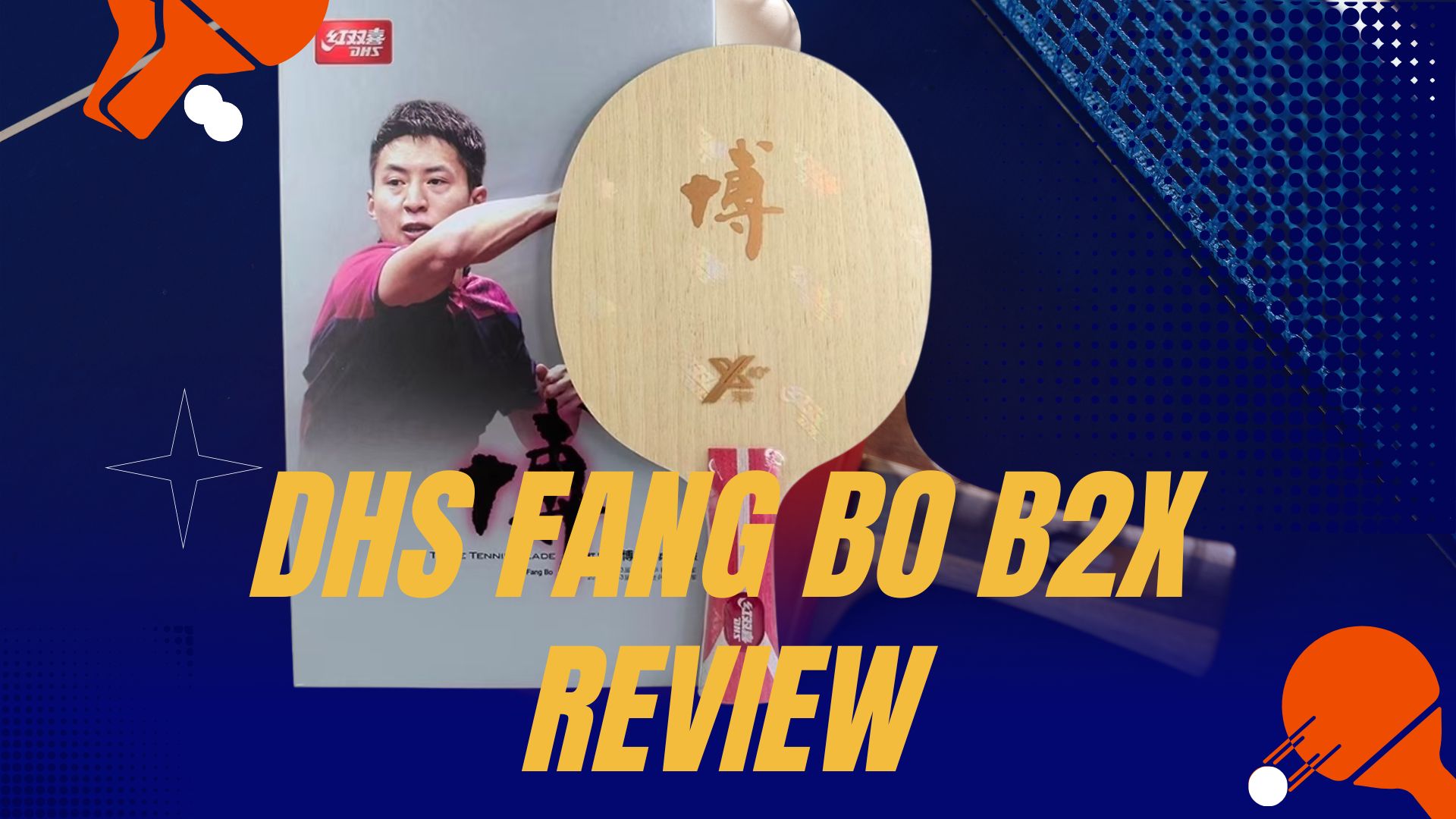
DHS Fang Bo B2X Review

| Image | Product | Features | Price |
|---|---|---|---|
 | A 5+2 inner arylate-carbon offensive blade with a thicker core, offering excellent dwell time, strong rebound, and reliable power for looping, counter-attacking, and mid-distance play. | Check Price | |
 | Featuring a 5+2 inner arylate-carbon construction inspired by the 968-5 structure and a harder ebony outer ply, this offensive blade delivers a crisp, direct feel, strong rebound, and excellent stability for powerful looping, counter-attacking, and mid-distance play. | Check Price | |
 | A refined 5+2 arylate-carbon offensive blade inspired by DHS’s classic 968 structure, offering a solid yet elastic feel, strong power transfer, and excellent stability for continuous looping, counter-attacking, and mid-distance play. | Check Price |
While the DHS Fang Bo B2X is often described as one of the most talked-about inner ALC blades in recent years, the reality is that DHS has produced many classic blades—especially flagship models such as the DHS Long 5 and the 301 series. We’ve already covered these top-tier blades in detailed reviews before.
In fact, most amateur players tend to see the Fang Bo B2X as a more affordable alternative to the Long 5. Given its relatively lower price—typically in the $50–60 range—it offers excellent value for money and stands out as a highly cost-effective option.
In this review, we will conduct a comprehensive and in-depth analysis of the blade, examining its structure, performance, and on-table characteristics in detail. Let’s take a closer look.
Who Is This Blade For
The Fang Bo B2X is a great choice for players who want solid performance without investing in high-end blades that cost over $100. It is particularly well-suited for beginner to intermediate players who prefer an aggressive, close-to-the-table or mid-distance attacking style.
In low to medium power situations, especially around the table, the B2X offers a very satisfying feel with good control, making it easier to execute consistent shots and develop overall technique. Its performance in the short game and quick exchanges is reliable and user-friendly.
However, for higher-level players, the limitations become more noticeable. In mid to long-distance rallies, the blade lacks some of the power reserve and depth needed for high-quality, sustained attacks. Players who rely heavily on strong topspin exchanges away from the table may find it slightly underpowered.
For advanced players seeking better performance in these areas, it would be worth considering the upgraded versions—Fang Bo B2X-P or Fang Bo B2X-E—which offer improved power, stability, and overall offensive capability.

Blade Structure
The Fang Bo B2X continues DHS’s signature family-style packaging. Although it is positioned as a mid-range, more affordable blade, it still maintains strong brand recognition. The piece selected weighs 85g, with a relatively straight and uniform surface grain, giving a solid first impression in terms of consistency.
In terms of construction, the B2X shares a similar structure with the DHS Long 5, but there are noticeable differences in material selection. The most obvious one is the softer outer ply. When tapping the blade, it lacks the crisp and sharp feedback that is characteristic of the Long 5, resulting in a slightly more muted feel.
Visually, the blade is quite striking, featuring a bold red color scheme. The front displays a prominent DHS logo, while the back includes the “Fang Bo Carbon” marking and the traditional DHS gold cup emblem at the handle base. The blade face itself remains clean and minimal, consistent with DHS’s design language.
Structurally, it follows a Limba + Ayous + Yellow ALC + Ayous (thickened core) + Yellow ALC + Ayous + Limba composition, with a thickness of 6.0 mm and a weight of 85g. The thickened core contributes to improved power and stability, which is one of the defining characteristics of the B2X.
General Feel
The blade offers a very clear and well-defined feel, with excellent feedback on ball contact. The sensation is solid and responsive—neither hollow nor overly woody—and the level of touch and feedback delivered to the hand is comparable to blades in the $100 range. Overall, the feeling is highly satisfying.
As an upgrade of the Fang Bo carbon series, the B2X features subtle structural optimizations based on the original version. By slightly reducing the thickness of the composite layers while increasing the thickness of the core, the blade delivers quicker feedback at the moment of contact and improved power from mid to long distance. This adjustment helps it better adapt to the demands of the 40+ plastic ball.
In the short game, the B2X no longer feels as “dull” as the first generation. Touch shots such as short pushes are more precise and controlled. One of the most noticeable improvements is in flicks over the table—they feel more effortless, with better engagement and a stronger sense of dwell time. The forehand also shows a high level of forgiveness, making it easier to execute consistently.
Additionally, due to the reduced thickness of the composite layers, the backhand benefits from improved energy transfer, making blocks and drives feel more supported and easier to execute.

Speed
The B2X delivers a very impressive sense of speed. When compared to the DHS Long 5X, the difference is minimal under low to medium power—both blades feel quite similar in this range. However, once you start applying full power, some distinctions become noticeable. The Long 5X produces a faster, more penetrating shot, with a stronger forward “kick” and a more solid finishing feel. In comparison, the Fang Bo B2X feels slightly less powerful. Under high-impact play, it can come across as a bit thinner in feedback, but overall, the gap in speed is not significant.
Thanks to the thinner composite layers and thicker core, the B2X exhibits a pronounced catapult effect. With around 50% effort in rallies, it is already easy to engage the ALC layer, producing a crisp “pop” sound and benefiting from a large sweet spot. Even when footwork is not perfectly in position, the blade still offers enough support to “lift” the ball back onto the table. This makes it quite user-friendly for many amateur players, where a certain level of forgiveness is essential.
While the consistency of looping—especially in terms of landing percentage—is quite reliable, I personally feel that the finishing power on flat hits is slightly lacking. Additionally, the forehand side clearly performs better than the backhand. Of course, this may also be influenced by my own backhand technique rather than the blade itself.

Spin
From mid to long distance, I tested its performance under full power to see if there was any noticeable “ceiling effect.” The result was fairly predictable—solid and reliable, but without any real surprises. There was no sense of limitation, but also no standout boost; shots that would normally land still land, and overall quality depends more on the player’s own technique and execution.
When compared to the DHS Long 5X, the difference becomes clearer in this range. The Long 5X offers a stronger sense of ball grip, producing a fuller arc and greater stability during rallies. The topspin also feels heavier and more pronounced. Under high power, the core of the 5X feels thicker and more solid than that of the B2X, giving it an edge in overall shot quality.
That said, for most amateur players—especially those who don’t generate full power or rarely step back from the table—the difference between the two blades is minimal in practical play.

Control
In terms of directional control, the B2X performs very close to the DHS Long 5X during offensive play, offering a comparable ability to control placement and shot angles. However, there is still a subtle sense that the blade feels slightly less solid. Under high-power attacks, the B2X doesn’t quite match the Long 5X in terms of stability and overall control on the ball.
In the short game—especially on touch shots like short pushes—both blades feel quite similar under low impact. The B2X provides very honest and direct feedback to the hand, allowing players to clearly sense the quality of their contact and develop a more intuitive feel for ball output. In this area, the difference is minimal, with the 5X holding only a slight edge.
That said, I believe penhold players in particular may prefer the B2X, as its touch and control in over-the-table play align very well with the demands of this playing style.
Defense
In the defensive phase, the two blades feel very well-matched, showing a high level of similarity in both trajectory control and their ability to absorb incoming power. Whether it’s passive blocking or controlling fast incoming loops, both blades provide a stable and predictable response, allowing the player to keep the ball on the table with confidence.
One subtle difference worth mentioning is the feedback on contact. The B2X produces a slight vibration, giving a more direct and raw sensation in the hand, whereas the Long 5X feels more dampened and solid, with less noticeable vibration. In that sense, the B2X can feel a bit more “lively” or even slightly harsher to some players.
That said, this difference does not significantly impact overall defensive performance. Aside from the added vibration, the two blades are very close in this aspect. The Fang Bo B2X still performs reliably in defensive situations, handling blocks and controlled returns with ease, and remains a solid choice even when under pressure.
DHS Fang Bo B2X-P
After a series of tests, it becomes clear that while the Fang Bo B2X offers excellent value for money, it is primarily suited for amateur players. For more advanced or professional athletes, the B2X falls slightly short of the DHS Long 5X in several aspects of overall performance.
As a result, DHS later introduced upgraded versions of this blade—the B2X-P and B2X-E—aiming to further refine its performance and better meet the demands of higher-level play.
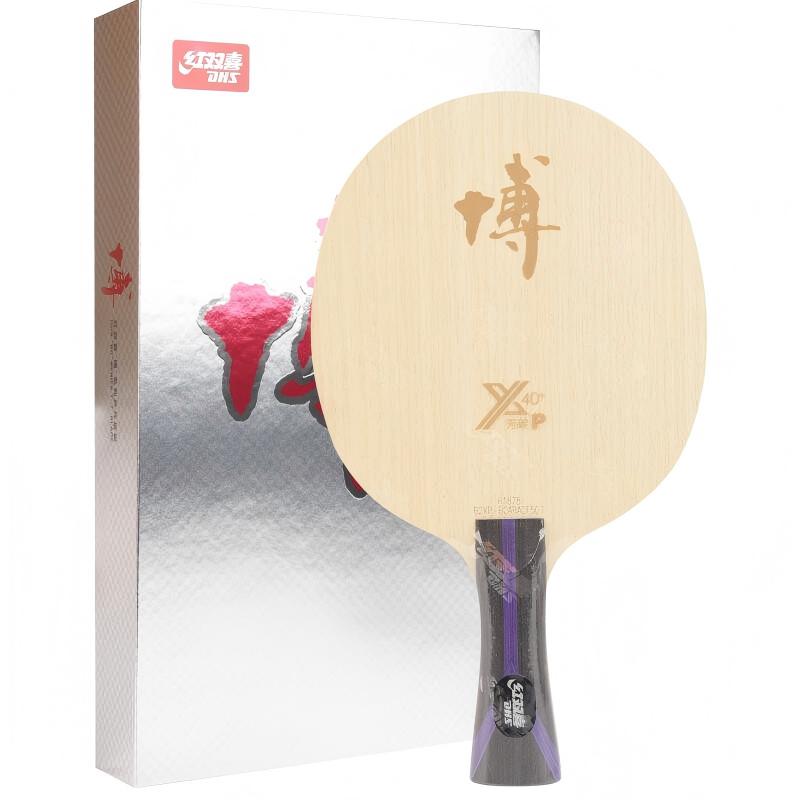
The Fang Bo B2X-P can be seen as a refined upgrade of the original B2X, with adjustments aimed at improving overall balance and playing feel. It retains the classic 5+2 inner ALC structure, but introduces a key change in material selection by using a Koto outer ply, which provides a crisper and more direct contact sensation.
In terms of specifications, the B2X-P typically features a thickness of around 5.9 mm and a weight of 88±3g, maintaining a similar profile to the B2X while offering slightly improved responsiveness.
Compared to the standard B2X, the most noticeable improvement lies in the feel and power transfer. The blade delivers a more solid and compact impact, allowing the ball to come off faster with better penetration. At the same time, the inner carbon structure helps retain a certain level of dwell time, preventing the blade from feeling overly harsh.
The B2X-P shows a more modern offensive character. The catapult effect is more pronounced, especially in the first topspin attack, while mid-distance rallies feel more efficient and stable. Compared to the B2X, its power output feels more complete, particularly during high-intensity exchanges.
DHS Fang Bo B2X-E
The Fang Bo B2X-E represents a further evolution within the Fang Bo series, positioned as a more advanced upgrade over the standard B2X. It adopts an upgraded 968-style inner carbon structure, bringing it closer to the construction used in higher-end DHS blades. The most notable change is the use of an ebony outer ply, which gives the blade a harder and more direct contact feel.
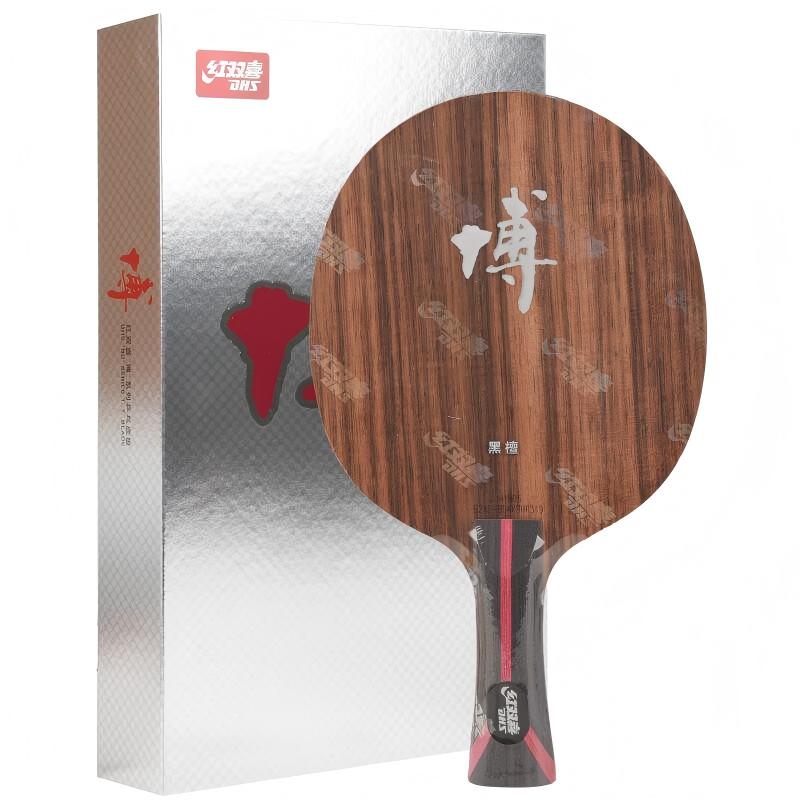
In terms of specifications, the B2X-E typically features a thickness of around 5.9–6.0 mm and a weight of 88±3g, similar to the other versions in the series. However, with a refined internal structure and a thicker core, it delivers a more solid and powerful overall response.
Compared to the B2X and B2X-P, the B2X-E feels noticeably crisper and more compact on impact. The dwell time is shorter, but the feedback is sharper, making ball output more precise and direct. This suits fast, forward-oriented attacking play, especially in high-speed rallies.
From mid to long distance, the blade shows stronger stability and better penetration. The enhanced core provides more power reserves, allowing for deeper and more threatening shots. At the same time, the inner carbon structure helps retain a reasonable level of control.
In the short game, the harder outer ply makes the blade more demanding. Touch shots require better technique, but for players with solid fundamentals, it offers very precise placement and clean feedback.
Rubber Pairing Recommendations
1. Players with Solid Technique
Expected Performance:
Strong power from mid-distance with excellent stability in rallies. Shots feel powerful during exchanges, but flat hitting at close to mid distance may feel slightly lacking.
Forehand Options:
- Butterfly Dignics 09C
- DHS Hurricane 3 (39°)
- Andro Rasanter R50
Backhand Options:
- Butterfly Tenergy 64
- Tibhar Evolution EL-S
- Xiom Vega Europe
2. Developing Players Focused on Feel (Close-to-Table Play)
Expected Performance:
Good balance between control and power at close to mid distance. Stable dwell time with improved touch, while still offering sufficient power when stepping back. Ideal for developing feel and consistency.
Forehand Options:
- Tibhar Evolution MX-P
- Butterfly Tenergy 05
- Donic Bluefire S1
Backhand Options:
- Butterfly Tenergy 05 FX
- Tibhar Evolution FX-P
- Donic Bluefire F1
- Butterfly Rozena
